Residential Renovation → Basement Development
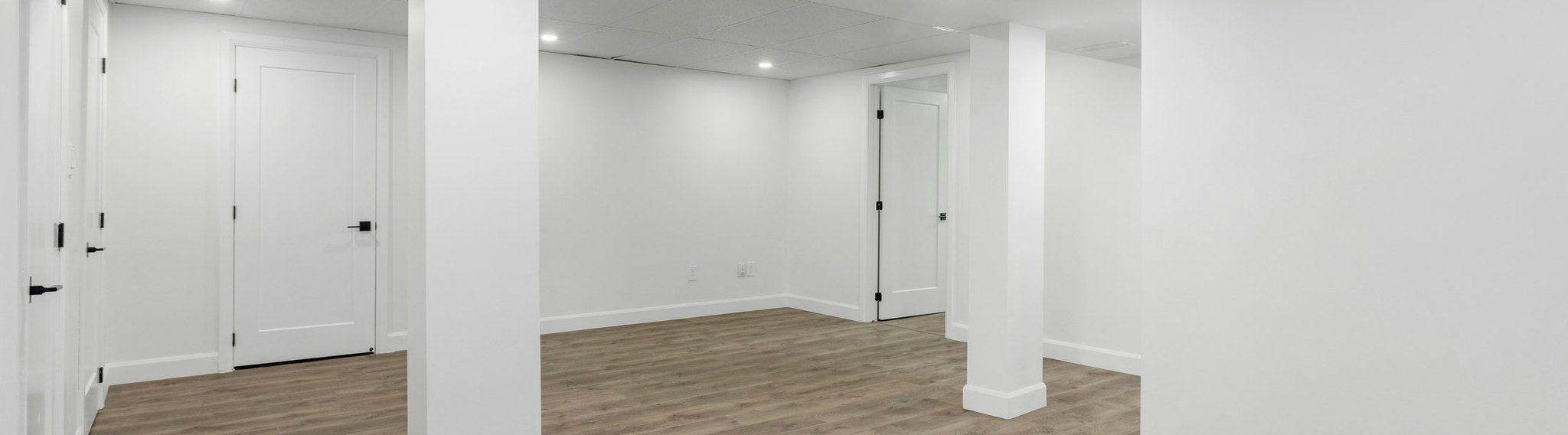
Unfinished basements developed into usable living space in Edmonton, Leduc & area. 780 Construction Inc. helps homeowners develop and finish unfinished basements — framing, drywall, flooring, paint, trim, bathroom finishing, and the interior work that turns an empty basement into a room worth using.
Basement development is not just about putting up walls and flooring. The space has to be planned around how it will actually be used, what permits may be required, where mechanical and utility access needs to stay open, and which regulated trades need to happen before the finishing work begins.
A good basement plan answers these questions early:
780 Construction Inc. helps homeowners turn unfinished basements into usable finished space with clear scope, proper sequencing, and interior finishing work that feels like part of the home — not an afterthought.
Open living area, flooring, paint, ceiling, and finishing work that makes the basement a comfortable place to spend time.
A finished bedroom with egress window where required, closet, flooring, drywall, paint, and trim — planned with permit and code requirements in mind.
A quiet, finished workspace below grade — framed, insulated, drywalled, painted, and finished properly.
A basement bathroom adds convenience and value. Tile, fixtures, vanity, and finishing work done properly. Plumbing requires a licensed trade.
A legal secondary suite is a larger and more regulated scope than a standard finished basement. If the goal is a rentable suite, that should be planned as a secondary suite project from the start.
See Secondary Suites →Basement development is a sequencing problem as much as a construction problem. Framing before drywall. Drywall before paint. Flooring after paint. A bathroom involves multiple trades in the right order. Getting the sequence wrong means going backward — and that costs time and money.
780 Construction Inc. helps homeowners get through basement development with clear scope, the right sequencing, and one point of contact for the interior finishing work.
How much does basement development cost in Edmonton or Leduc?
Basement development cost depends on the size of the basement, the layout, the number of finished rooms, the finishes selected, and whether the project includes a bathroom, bedroom, egress window work, plumbing, electrical, HVAC, or permit-related requirements. The most accurate starting point is to describe the basement, share photos if possible, and talk through what you want the space to become.
What affects the cost of finishing a basement?
The biggest cost factors are usually layout, framing, drywall, flooring, ceiling type, bathroom work, lighting and electrical needs, plumbing, HVAC changes, trim, doors, paint, and how much preparation the basement needs before finishing can begin. A simple open family room is a different project than a basement with bedrooms, bathroom finishing, storage rooms, and multiple finished areas.
How long does basement development take?
Timeline depends on the scope. A straightforward basement finish can often move much faster than a more involved development with multiple rooms, a bathroom, regulated trades, inspections, or special materials. 780 Construction Inc. discusses timing once the basement, scope, and next steps are reviewed.
Do I need a permit to develop my basement in Edmonton?
Most basement development projects in Edmonton require permits, especially when building or finishing a living room, recreation room, bedroom, or bathroom. Electrical, plumbing, gas, heating, and ventilation work may require separate trade permits. Permit requirements should be confirmed with the City of Edmonton before work starts.
Do I need a permit to develop a basement in Leduc?
Basement development in Leduc should be checked with the City of Leduc before work starts. Leduc’s basement development documentation asks for floor plans, room uses, door and window locations, smoke and carbon monoxide alarm locations, and electrical, plumbing, and heating layouts where applicable.
Can I add a bedroom in the basement?
Yes, a basement can often be developed to include a bedroom, but bedroom planning needs to consider permits, window size, egress, alarms, layout, and comfort. Any bedroom should be reviewed before framing and finishing so the work is planned properly from the start.
What is an egress window, and why does it matter?
An egress window is an emergency exit window required for basement bedrooms in many situations. It needs to meet minimum size and opening requirements and be usable in an emergency. If a basement bedroom requires egress work, that should be reviewed before the room is framed and finished.
Can you finish a basement bathroom?
Yes. Basement bathroom finishing can be part of the project, including framing, drywall, tile, flooring, vanity, fixtures, paint, trim, and finishing details. Plumbing work must be handled by the appropriate licensed trade and permit process where required.
Can 780 coordinate electrical, plumbing, and HVAC?
780 Construction Inc. focuses on the interior construction and finishing work. When electrical, plumbing, HVAC, or other regulated trades are needed, the work has to be handled by the appropriate qualified professionals. 780 can help keep the finishing work sequenced around those trades so the project does not move backward.
Can my basement become a legal secondary suite?
A legal secondary suite is a larger and more regulated scope than a standard finished basement. It may involve separate living, sleeping, kitchen, bathroom, entrance, safety, sound separation, permit, and code requirements. If the goal is a rentable suite, that should be planned as a secondary suite project from the start.
What flooring works best in a basement?
Basement flooring should be chosen with below-grade conditions in mind. Many homeowners consider vinyl plank, laminate, carpet, or tile depending on moisture conditions, comfort, budget, and how the room will be used. The right choice depends on the basement and the finished use of the space.
Should I choose a drywall ceiling or drop ceiling?
A drywall ceiling gives a more finished look. A drop ceiling can make it easier to access plumbing, electrical, and mechanical areas later. The better option depends on the basement layout, ceiling height, budget, and how much utility access needs to remain available.
Should I test for radon before finishing my basement?
Homeowners may want to consider radon testing before turning an unfinished basement into regular living space, especially if it will become a bedroom, office, family room, or suite. Radon testing and mitigation are separate from 780 Construction Inc.’s finishing work, but they are easier to address before walls and flooring are finished.
Do you develop basements in Edmonton and Leduc?
Yes. 780 Construction Inc. helps homeowners with basement development and finishing in Edmonton, Leduc and nearby communities.
How do we get started?
Call, text, or send a message. Describe the basement, what you want the space to become, and your ideal timeline. Photos are helpful. From there, 780 Construction Inc. can talk through the scope, next steps, and what needs to be reviewed before the work begins.
Call, text, or use the contact form to talk through the space and the next step.